October 05, 2026
ACH vs Wire vs SWIFT vs SEPA: what businesses need to know
Understand the differences between ACH, Wire, SWIFT and SEPA, and what to check before sending or receiving international business payments.


In this article
- At a glance
- What is ACH?
- What is a Wire transfer?
- What is SWIFT?
- What is SEPA?
- What is the difference between ACH and Wire?
- Are Wire and SWIFT the same thing?
- How to choose the right payment method
- Time and cost: why there is no universal answer
- Correct details also improve reconciliation
- How this connects to TroqPay virtual accounts
- Frequently asked questions about ACH, Wire, SWIFT, and SEPA
- Use the right instructions for every payment
ACH, Wire, SWIFT and SEPA frequently appear in international payment instructions. Because the four names are often shown together, it is easy to assume they are different versions of the same network. They are not.
In business payments, ACH usually refers to transfers processed through the United States clearing network. Wire describes a bank transfer handled as an individual instruction. SWIFT is a secure messaging network used by financial institutions. SEPA sets common rules for euro transfers between participating institutions.
Understanding these differences helps a business share the right details, choose the appropriate flow, and avoid inaccurate expectations about time and cost.
At a glance
- ACH: domestic transfers in the United States, usually in USD. It often makes sense for recurring collections. Instructions generally include the beneficiary, account number, and ACH routing number.
- Wire: domestic or international bank transfers — in this article, mainly USD. It is common for time-sensitive payments or transfers specifically instructed as Wire and uses details for that method.
- SWIFT: messages for international payments in different currencies. It often appears when institutions need to exchange instructions across countries and may require an account or IBAN, bank, BIC/SWIFT code, and an intermediary.
- SEPA: EUR transfers between institutions participating in the SEPA area. It supports one-off or recurring euro payments and normally uses the beneficiary, IBAN, and payment reference.
The best option is not defined by its name alone. It depends on where the payment starts, the currency, the sender's bank, urgency, costs, and the methods accepted by the receiving account.
The terms also play different roles. ACH and SEPA are schemes with their own rules. Wire is a category of bank transfer. SWIFT carries standardized financial messages, but it does not hold the customer's account or move the money by itself.
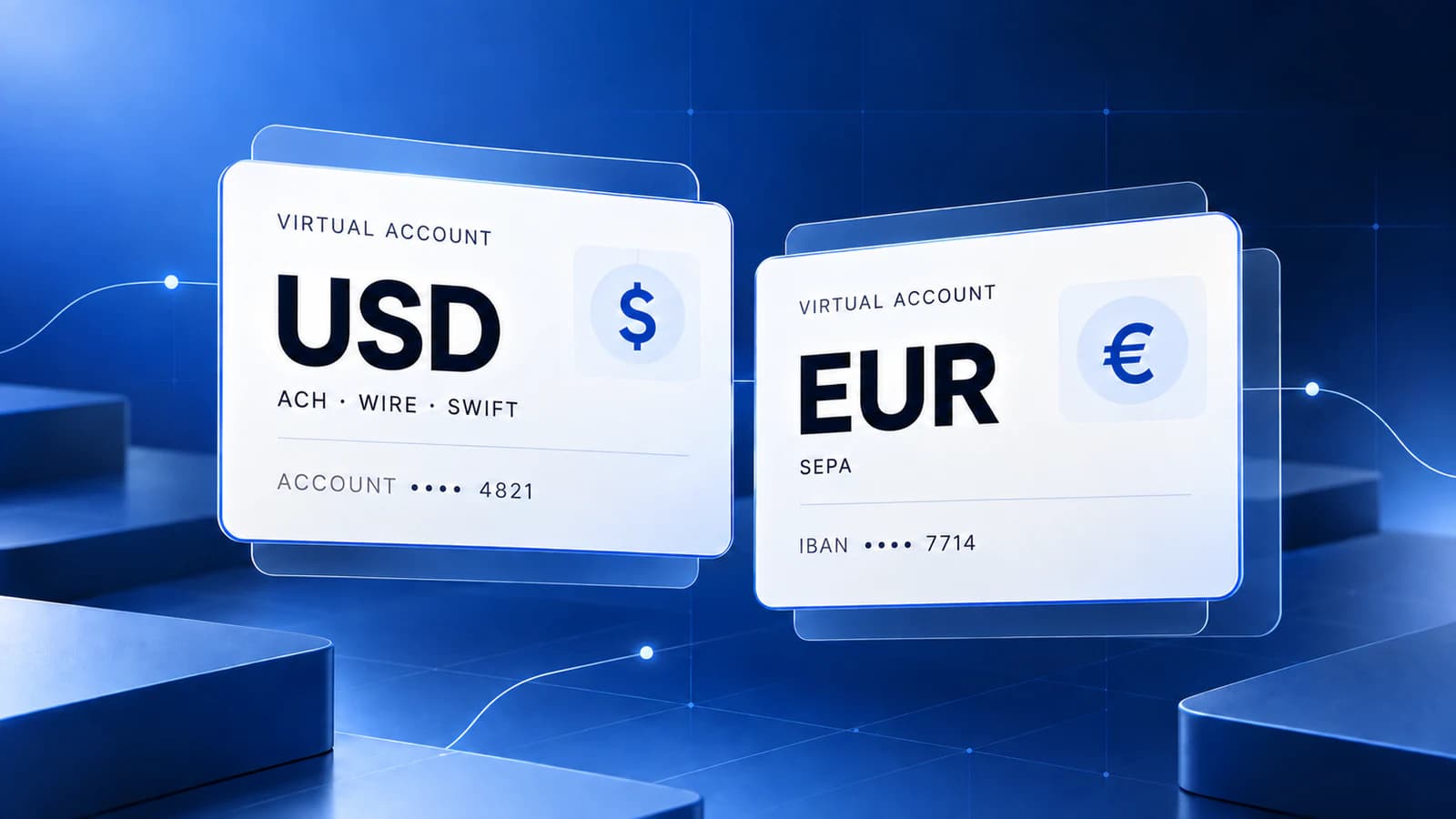
Eligible businesses can request TroqPay details to receive USD by ACH, Wire, or SWIFT and EUR through SEPA. Availability depends on the enabled product and the operation. Learn when a USD or EUR virtual account makes sense or explore TroqPay virtual accounts.
What is ACH?
ACH stands for Automated Clearing House. In the context of a US dollar account, it usually refers to the United States clearing network used to exchange electronic credits and debits.
FedACH is one of the services that lets financial institutions send and receive transaction files through the ACH network. Traditional processing happens in batches, but same-day processing is also available for eligible transactions.
Businesses often encounter ACH in situations such as:
- recurring collections from customers in the United States;
- domestic invoice payments in USD;
- payroll and authorized debits;
- transfers where predictability and cost matter more than individual Wire processing.
To send an ACH transfer, the payer normally needs details such as the beneficiary name, account number, and an ACH-compatible routing number. The exact fields should be copied from the instructions provided by the recipient.
ACH should not simply be translated as a “slow transfer.” Different windows and options exist, and final timing also depends on the originating and receiving institutions.
What is a Wire transfer?
A Wire is a bank transfer normally processed as an individual instruction. In the United States, one of the main infrastructures for this type of payment is the Fedwire Funds Service, a real-time gross settlement system used by participating institutions for important, time-sensitive payments.
For a business, Wire often appears when:
- the payment is more urgent;
- the amount or context requires individual handling;
- the sender prefers a domestic bank transfer in USD;
- the beneficiary account instructions specifically indicate Wire.
Wire instructions may show a routing number that differs from the one used for ACH. Reusing the details for one method in the other is therefore unsafe unless the instructions confirm it.
Wire also does not necessarily mean SWIFT. A Wire can be domestic, such as a transfer between institutions in the United States. An international transfer may involve SWIFT, correspondent banks, and other infrastructure to complete the movement.
What is SWIFT?
SWIFT is a network used by banks, financial institutions, and large companies to exchange standardized, secure messages about financial transactions across countries.
Swift itself explains that it is not a bank and does not move money directly. The network carries the instructions. The transfer of value takes place between the institutions in the payment flow.
For an international transfer, the sender's bank may send a message through the SWIFT network to the beneficiary's bank. Depending on the currency and the relationship between the institutions, one or more intermediaries may be involved before the final credit.
The instructions may request:
- beneficiary name and address;
- account number or IBAN;
- bank name and address;
- BIC/SWIFT code;
- intermediary bank details, when applicable;
- a commercial reference to identify the invoice or contract.
Not every field appears in every payment. The sender should use the instructions for the relevant account and currency without completing details by assumption.
What is SEPA?
SEPA stands for Single Euro Payments Area. Its purpose is to let euro transfers follow harmonized rules and formats between institutions participating in the SEPA area.
According to the European Payments Council, the SEPA Credit Transfer scheme supports one-off or recurring euro payments. Common rules help businesses receive money from customers in another SEPA country in a way similar to a domestic transfer.
Different options exist. SEPA Credit Transfer is the conventional credit transfer. SEPA Instant Credit Transfer was created to make funds available in seconds, provided the institutions and the flow support the instant scheme.
A SEPA transfer normally uses details such as the beneficiary name, IBAN, and payment reference. The institution and the transaction may require additional information.
SEPA is not a synonym for every transfer made in Europe. The payment must be in euros and follow a SEPA scheme between participating institutions.
What is the difference between ACH and Wire?
In the United States, both methods can move USD between bank accounts, but their processing and typical uses differ.
ACH is often used for recurring or less urgent transactions and may be processed in batches. Wire is normally handled as an individual transfer and often appears in time-sensitive payments. That does not make either method the universal winner.
Before choosing, confirm what the account accepts, the costs, the correct banking details, and how the payment will be identified.
Are Wire and SWIFT the same thing?
No. Wire describes the bank transfer. SWIFT is the network through which institutions can exchange messages about an international payment.
A domestic USD Wire does not need to be a SWIFT transfer. An international payment may be informally called a “SWIFT Wire” because it combines a bank transfer with messages sent through the SWIFT network.
How to choose the right payment method
Instead of looking for one universal answer, start with the characteristics of the transaction.
1. Where will the payment be sent from?
A customer in the United States may have access to ACH or Domestic Wire. A customer in another country may need to follow SWIFT instructions to send USD. A customer with an account at an institution participating in SEPA may use SEPA to pay in euros.
2. Which currency should arrive?
ACH and domestic Wire frequently appear in USD account instructions. SEPA is designed for EUR payments. SWIFT can carry instructions for different currencies, provided the institutions and the flow support them.
3. Is the transaction recurring or one-off?
A business receiving monthly payments from the same customer may prioritize a route that is easy to repeat and reconcile. A one-off, urgent payment may require a different approach.
4. Which costs and timeframes were presented?
Do not assume a name determines cost or timing by itself. The originating bank, receiving institution, intermediaries, cut-off times, weekends, and applicable checks can all affect the outcome.
5. Which details appear in the instructions?
Always use the set of details for the chosen method. An ACH routing number, Wire instructions, a BIC/SWIFT code, and an IBAN serve different purposes. Mixing fields may cause delays, returns, or the need for an investigation.
Time and cost: why there is no universal answer
ACH is often summarized as cheap and slow, Wire as fast and expensive, SWIFT as international, and SEPA as simple. In practice, costs and timeframes also depend on the institutions, currency, country of origin, cut-off time, possible intermediaries, and applicable checks.
Even a fast method does not guarantee immediate credit in every case. ACH has same-day processing for eligible transactions, SEPA offers an instant option when the flow is compatible, and a SWIFT message may still require additional steps between the institutions involved.
The more useful question is not “which method is always faster or cheaper?” but “which method is available for this origin, currency, account, and need?”
Correct details also improve reconciliation
Choosing the right method solves only part of the process. The business still needs to identify who paid, which invoice the funds belong to, and whether the amount received matches the amount expected.
When sending instructions to a customer:
- clearly state whether the details are for ACH, Wire, SWIFT, or SEPA;
- state the expected currency;
- use the beneficiary name exactly as shown;
- include a commercial reference when the flow supports it;
- do not mix details from different methods;
- keep the instructions connected to the invoice or contract.
A transfer received without context still creates work. Clear instructions reduce questions for the payer and make reconciliation easier for the recipient.
How this connects to TroqPay virtual accounts
TroqPay virtual accounts provide details for receiving USD or EUR transfers according to the product enabled for the business.
For USD, the operation may accept ACH, Wire, or SWIFT. For EUR, funds may be received through SEPA. The business shares instructions that match the customer and tracks the incoming payment and its status in TroqPay.
This does not mean every account automatically accepts every method. Availability depends on eligibility, the KYB process, and the characteristics of the operation.
If the business needs to send funds to suppliers, global payments cover a different part of the operation. Receiving through a virtual account and paying a beneficiary are different flows, even when they use related currencies or infrastructure.
Frequently asked questions about ACH, Wire, SWIFT, and SEPA
Is ACH used only for US dollar payments?
In this article, ACH mainly refers to the United States network found in USD account instructions. Other countries have automated clearing systems, but their names, rules, and currencies vary.
Are an IBAN and a SWIFT code the same thing?
No. An IBAN identifies an account in a standardized format in countries that use it. A BIC, also known as a SWIFT code, identifies an institution on the messaging network. The instructions may request one or both.
Which methods can a TroqPay virtual account receive?
USD accounts may receive ACH, Wire, or SWIFT, while EUR accounts may receive through SEPA. Final availability depends on the enabled product and the business's eligibility.
Use the right instructions for every payment
ACH, Wire, SWIFT, and SEPA do not compete in a single list. Each term describes a different part of the infrastructure used to send or receive money.
For a business, the decision becomes clearer when it starts with four questions: where the payment comes from, which currency should arrive, which methods the account accepts, and which instructions need to be shared.
Explore TroqPay virtual accounts in USD and EUR and learn how to request banking details that fit your operation.